


Somewhere in Bagru, a craftsman lifts a hand-carved wooden block, presses it to cloth, and repositions it exactly one length to the right. Then again. The block is the same; the movement is the same; the resulting pattern covers a full width of fabric without a single gap or misalignment. This is not repetition as limitation — it is repetition as a system. The same logic that built Indian block printing, ikat weaving, and Sanjhi stencil work also answers one of the most persistent problems in a new home or renovation: how to cover a wall beautifully, without a custom design, without waiting weeks, and without spending the next three months deciding.
A repeat pattern wallpaper does exactly what the block printer does — one motif, repeated with precision across the width of a wall. And like the craftsman, it delivers a finished room with a logic that feels complete. No designer required. No custom brief. No four-week lead time.
Why the blank wall stays blank
When people move into a new home or start a renovation, walls are usually last. Furniture arrives, curtains go up, the rug gets chosen — and the walls sit bare for months while the decision gets deferred. Custom murals feel like a major commitment: lead times, site visits, installation specialists. Solid colours feel too plain once you've seen what a patterned wall can do. And the repeat pattern — the most practical and historically grounded option — often gets dismissed as the "safe" choice, when it is in fact the right one.
A well-chosen repeat pattern does things a plain wall and most murals cannot. It gives a room rhythm. The eye moves across the surface and finds a cadence — the same motif appearing again, differently lit, always expected, never boring. In a bedroom, that rhythm creates calm. In a living room, it creates warmth. In a hallway, it creates a sense of movement and arrival.
The practical argument is just as strong. A standard roll covers roughly 5 square metres. A typical bedroom accent wall — 3 metres wide, 2.7 metres high — takes three to four rolls and, with a clean surface and straight corners, one to two hours to install. The wall that has sat blank for six months is done before the afternoon is out. No specialist, no second visit, no mess that lingers for days.

The pattern that built Indian rooms
The repeat pattern is not a modern design concession. It is the foundational logic of Indian textile and craft tradition — and understanding that changes how you see it on a wall.
Ikat — the resist-dyeing tradition from Gujarat, Odisha, and Andhra Pradesh — is built entirely on the repeat. Yarns are dyed in sections before weaving, so the pattern emerges from the structure of the cloth itself, every thread a restatement of the motif. Sanjhi, the stencil craft of Vrindavan, works the same way — a single cut-paper pattern pressed across a surface with the precision of a stamp. Rajasthani block printing produces metres of cloth from one carved wooden block and a steady hand. In each tradition, the repeat is not what you do when you cannot afford something custom. It is the structure that holds the design together.
This matters for walls because the same logic applies. A repeat pattern wallpaper is not a compromise version of a mural. It is a different thing entirely — a system of rhythm and coverage that gives a wall coherence that a single large image often cannot. Where a mural asks the room to orient toward it, a repeat pattern becomes the room's ground layer — the surface against which furniture, textiles, and light all become more readable.
Indian homes have always understood this. The carved teak screen, the block-printed bedcover, the Sanjhi pattern on a wall — all of them work through repetition. The wall is simply the next surface.
What makes a repeat pattern room look considered
Three things determine whether a repeat pattern room reads as deliberate or busy: scale, palette, and placement.
Scale comes first. A small-scale repeat — dense florals, tight geometrics, fine stripes — works on accent walls in compact rooms where a large-scale motif would fragment before completing its rhythm. A large-scale repeat needs a longer or taller wall to establish its cadence before it meets a corner. The most common mistake with repeat pattern wallpaper is applying a large-scale scenic or ikat print to a wall too narrow to contain it.
Palette is more forgiving than most people expect. A repeat that works in three tones — a ground colour, a primary motif, and an accent — pairs with almost any furniture. The ground colour does the heavy lifting: a cream or sand ground reads warm and recessive; a navy or bottle green ground reads rich and room-defining. The motif colour should appear at least once elsewhere in the room — a cushion, a curtain edge, a lamp base — to hold the scheme together.
Placement is the easiest decision. One wall is enough. The wall you face from the door, or the wall behind the bed — that is where the repeat goes. The other walls stay plain. The repeat does not need to wrap a room to work. It needs one good wall, well chosen.
Which pattern for which room
Different pattern types suit different rooms, and matching the two correctly is what makes the difference between a room that looks finished and one that merely looks decorated.
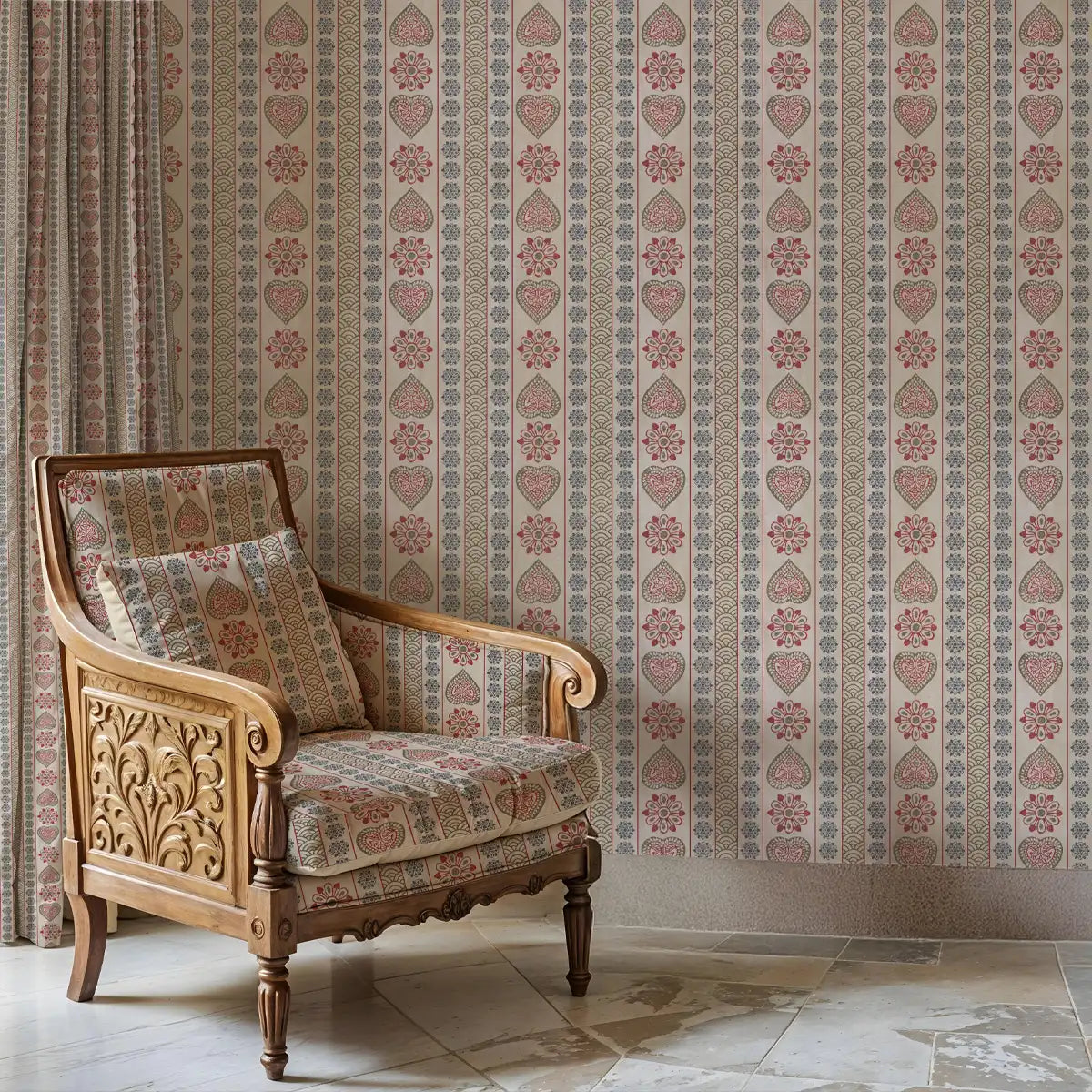
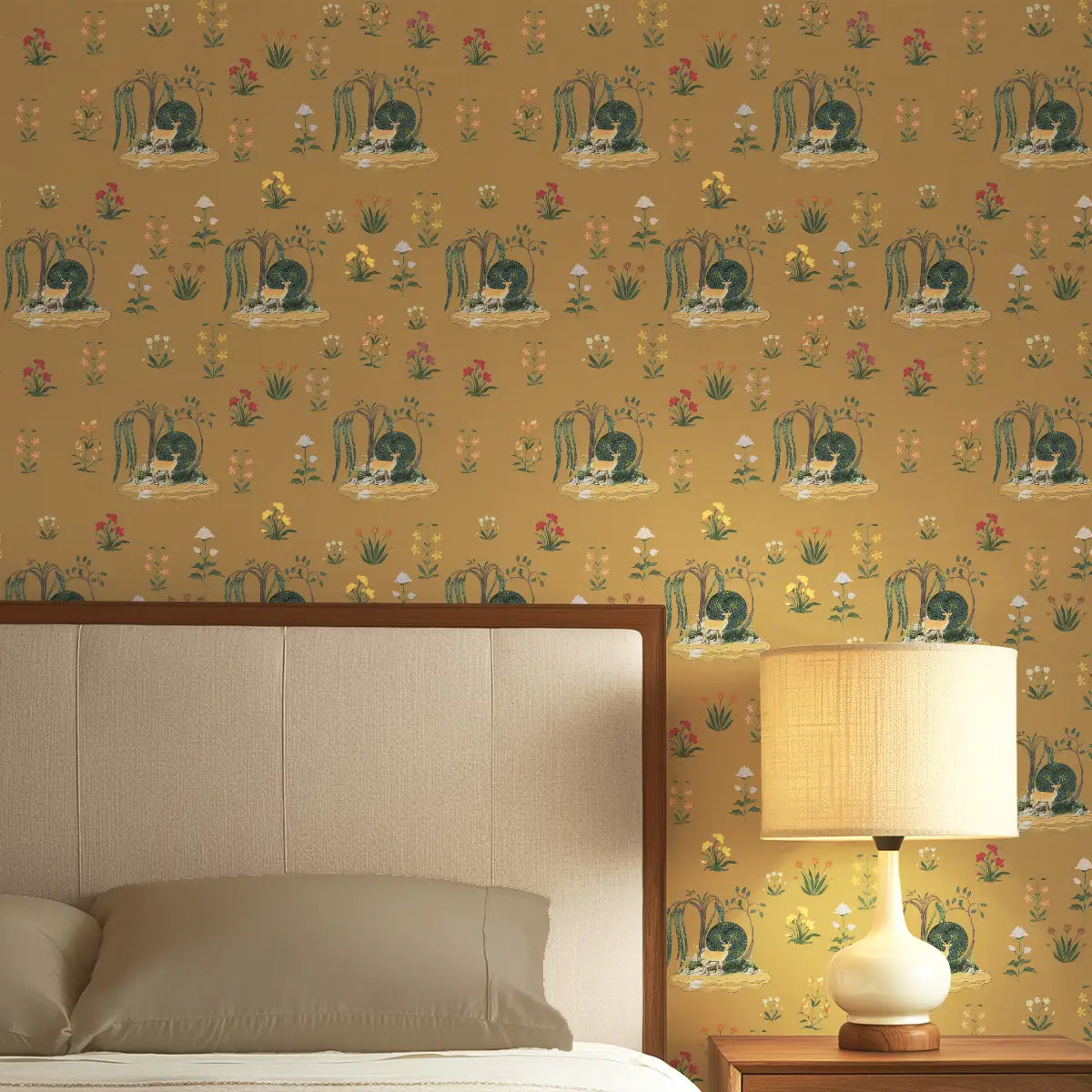
For bedrooms, Indian floral repeats work best behind the headboard wall. The Rani floral pattern — available in blue, pink, and warm neutrals — sits at the right scale for most Indian bedrooms: enough visual weight to anchor the room, open enough to read as calm rather than busy. The Sanjhi in sage mist is the quieter option — fine-line stencil repeat that brings the feel of traditional Indian craft without dominating a room.
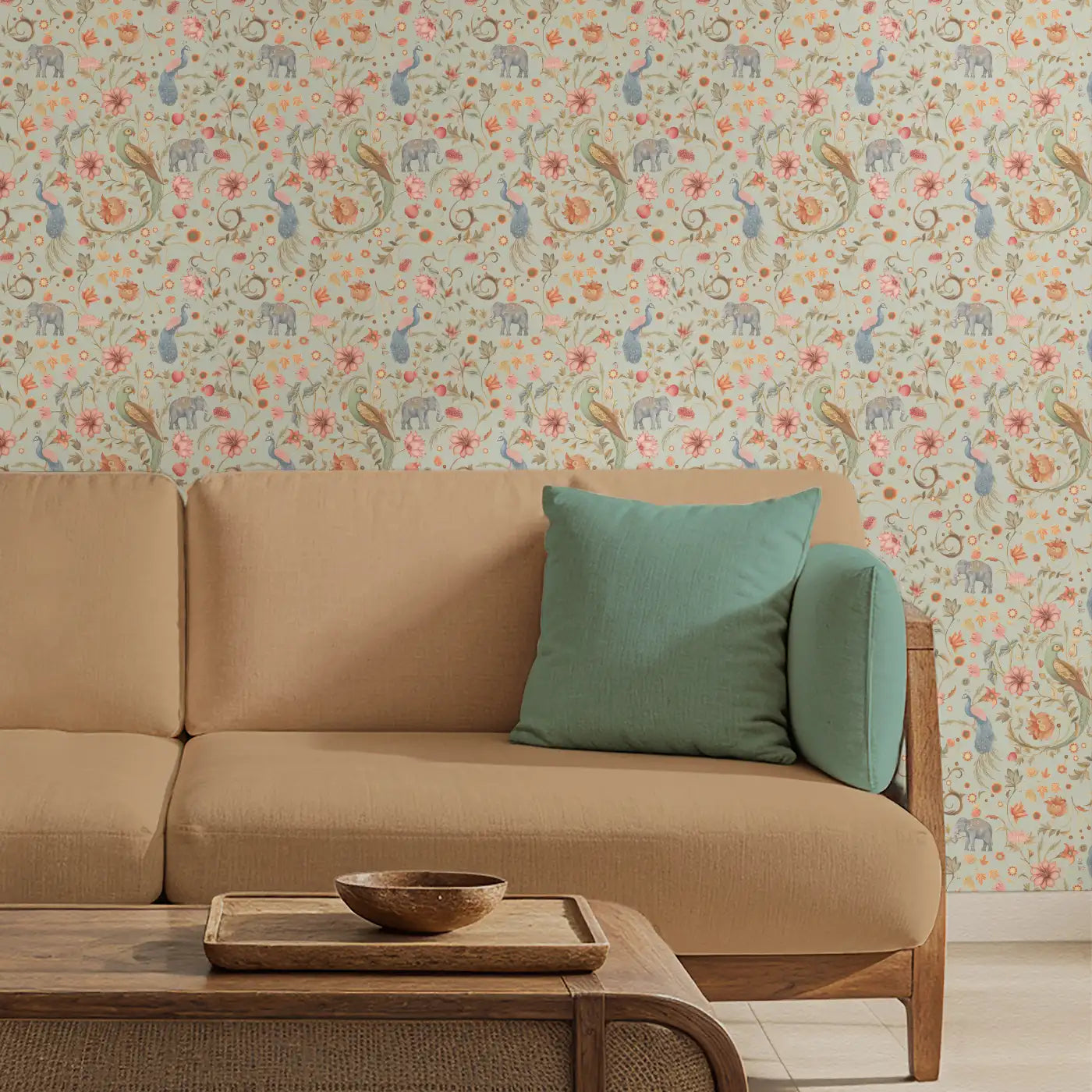
For living rooms, block print designs carry the structure a more active room needs. The Sarangi block print in beige has the visual weight of a woven textile on a wall — the kind of pattern that holds a room together even when furniture is still arriving. Pair it with jute, dark wood, and terracotta accents. The Gulmohar in terracotta takes a bolder step — a richer ground colour that works especially well in north-facing rooms where the wall needs warmth.
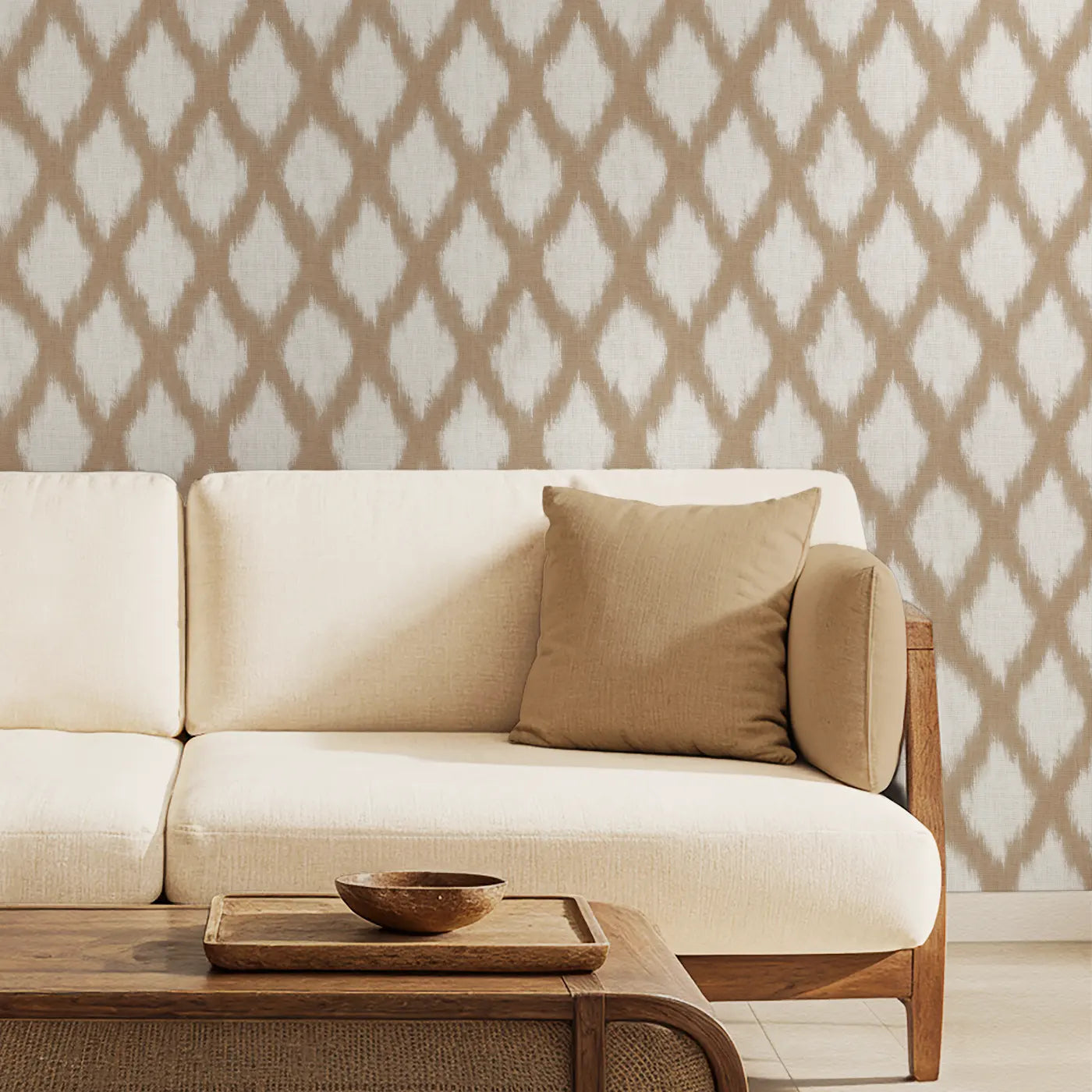
For studies and home offices, the geometric range provides visual interest without distraction. The classic Indian ikat in beige reads as textile from across the room and sharpens to a precise diamond grid when you're working at the desk. For rooms where focus matters, that kind of quiet structure sits better than a floral.
For dining rooms and more formal spaces, the European Tapestry in off-white gives depth and occasion without requiring matching chairs or a chandelier to justify it. The compositions are dense — botanical arrangements, birds among climbing vines — but on an off-white ground they read as layered texture rather than pattern.
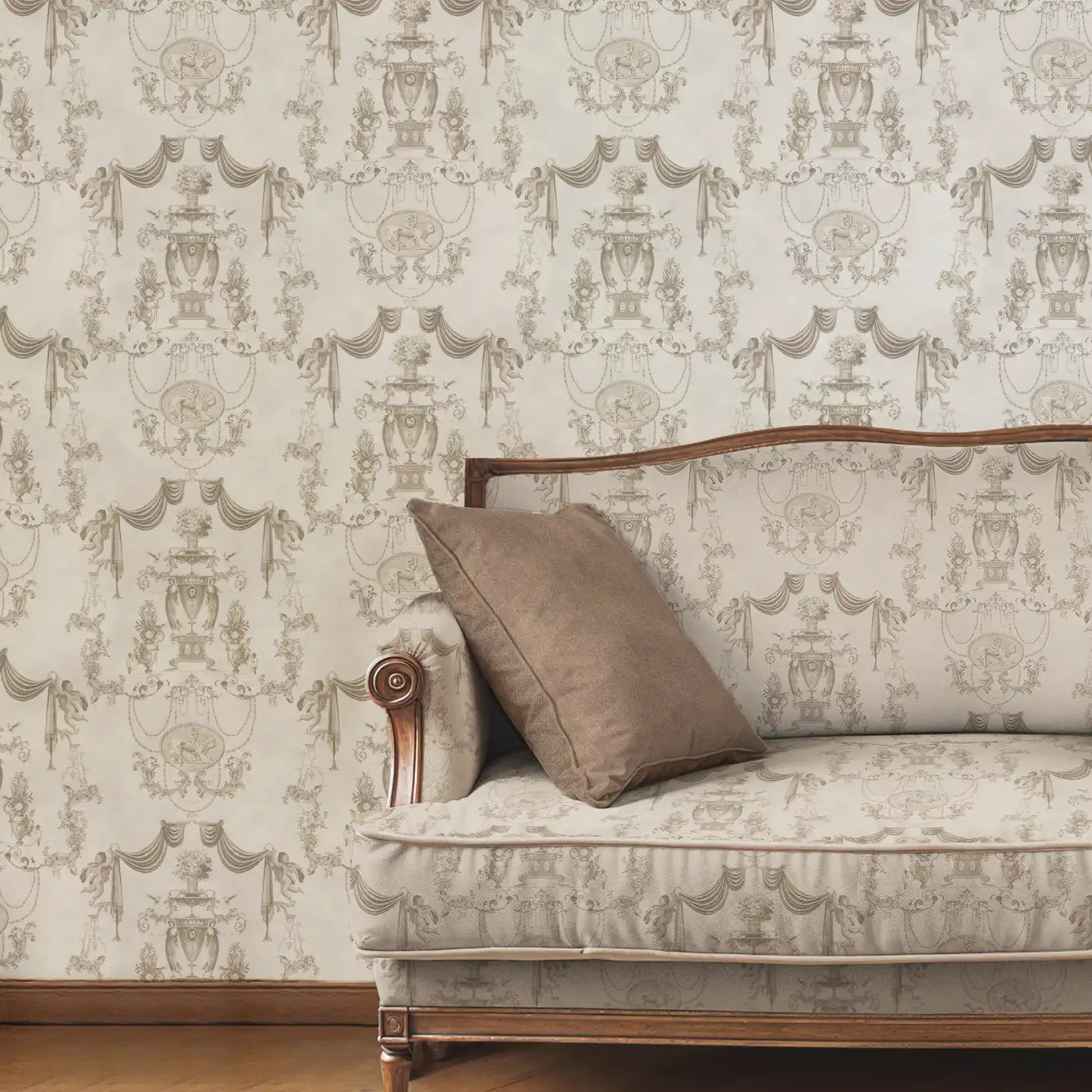
370 patterns. No custom order. Ships in three days.
The Atarangi collection by Life n Colors is built for exactly this kind of decision-making. 370 repeat pattern wallpapers — Indian block prints, florals, geometrics, ikat patterns, European tapestry designs, stripes, and abstract compositions — all in standard roll sizes, all ready to install without a custom order or a long lead time.
Rolls are printed on PVC-free material with non-toxic inks, rated to last 12–15 years with normal care, and gently washable — safe for bedrooms, kids' rooms, and any wall in the house. The collection starts at ₹5,115 per roll. A single accent wall typically takes three to four rolls depending on ceiling height and wall width. There is no minimum order, no specialist installation required, and no design brief to fill in.
For a new home that needs walls sorted before the furniture settles — or a renovation that has put the wall decision off long enough — the Atarangi collection is the place to start.
One wall is enough
The blank wall is not a neutral choice. It tells everyone who enters that the house is still in progress. A repeat pattern wallpaper tells them it's done — and done with something that has three centuries of design logic behind it.
It also happens to be the thing a first-time homeowner or renovator can do in an afternoon, without a specialist, without a custom quote, and without a long wait.
Browse the full Atarangi repeat pattern wallpaper collection — 370 designs, ships in three working days. If you want to see the print in your own light before committing, request a sample swatch first.